 English


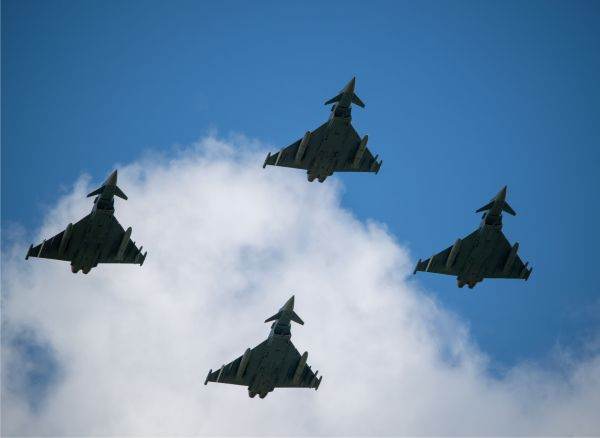
For the international military base at Cincu, the shift in NATO strategy involves several aspects: the speed at which reinforcements can arrive, the equipment they bring, and the duration for which they can sustain a defense. According to information on the NATO website, Romania hosts an Allied battlegroup at Cincu led by France, with significant contributions from Belgium, Luxembourg, and Spain. In effect, one of the structures designed to translate political solidarity into defense capability is already operational on Romanian soil.
For Romania, an uncomfortable question arises: what happens if Europe is required to shoulder a greater share of this defense at a time when numerous essential capabilities still rely on the United States? An analysis by the European Union Institute for Security Studies (EUISS) warns that current NATO planning assumes a 30% US contribution to capabilities by 2032, including critical functions such as command, control, and force integration. The authors argue that the next planning cycle risks being based on unrealistic assumptions regarding the availability of these resources. For a state on the Eastern Flank, the implication is clear: the effectiveness of Allied troops depends on the systems that coordinate and support them.
This issue lies at the heart of the preparations for "Political Guidance 2027," the new political directive for NATO defense planning. According to the North Atlantic military alliance's website, Admiral Pierre Vandier-the Supreme Allied Commander Transformation-confirmed as early as January 22, 2026, that the Alliance is working on a document scheduled for the coming year. This directive will guide military requirements and, subsequently, the objectives that allies must integrate into their own defense plans.
In an article published last Thursday in the French daily La Lettre-as well as in a post detailing the investigation behind that piece-author Matthieu Fauroux explains the European dilemma: how can European allies compensate for the withdrawal of American capabilities for which they have no direct equivalent-such as B-52 bombers-when the funding and time required for rearmament are subject to urgent time constraints?
One of the approaches being analyzed involves finding a more efficient balance between advanced equipment, such as Rafale and F-35 jets, and large numbers of low-cost drones. For Romania, the relevance of this debate lies in the future configuration of Allied defense: what assets will be available, where they can be deployed, and how quickly they can be replaced following losses.
However, the mere accumulation of equipment does not guarantee readiness. On September 30 in Brussels, Belgian Minister Theo Francken warned that Europe requires enhanced air defense capabilities, as well as Ukrainian production and technology. He also raised the issue of rapid drone obsolescence: vast quantities purchased today could lose their utility within just a few months. Defense systems must be capable of absorbing innovation while simultaneously building up stockpiles. The Paris-Brussels-Romania link is already visible in Belgium's operational plan for 2026. According to a document cited by Theo Francken and published on his website, francken.belgium.be, Belgium is focusing a significant part of its efforts on the Eastern Flank in Romania, as part of the French-led battlegroup. The permanent contribution includes an infantry company, an engineer platoon, logistics support, and a detachment specialized in chemical, biological, radiological, and nuclear (CBRN) decontamination. These elements demonstrate that defense also entails the ability to keep troops operational under challenging conditions.
NATO also notes that allies are practicing the ability to rapidly reinforce the battlegroups in Romania and Bulgaria up to brigade level. The key word here is "rapidly": the value of reinforcements depends on their ability to arrive on time and operate jointly. This is one of the practical tests through which Romania will experience the results of the negotiations for 2027.
However, there is an obstacle that rhetoric about solidarity cannot overcome. On September 24, Reuters reported that the European Defence Agency's first annual report deemed current plans insufficient to meet the 2030 readiness objective. The identified shortfalls concerned air and missile defense, land and naval forces, ammunition, and drones. While the report focuses on the EU, these deficits impact the resources European members contribute to NATO.
Euronews.com indicates that, in Brussels, this warning also has an industrial dimension. Speaking at the Euronews summit on September 30, Belgian Defense Minister Theo Francken warned of a "dark winter" for Europe, marked by new hybrid attacks. He called for strengthening air defenses, ramping up production, and utilizing Ukrainian technology. His observation regarding drones touches on an uncomfortable issue for military procurement: a massive stockpile can be rapidly lose their utility if the technology becomes obsolete within a few months. Preparing for conflict requires both stockpiles and the capacity to modernize them.
The Ukrainian experience compels the Alliance to accelerate its adaptation. NATO's layered counter-drone initiative, LCI-X, operates on three-month cycles to identify, test, and integrate solutions. The joint NATO-Ukraine center (JATEC) in Poland incorporates lessons learned from countering Russian unmanned systems into Allied experimentation. For the defense of the Eastern Flank, the speed of this knowledge transfer may matter just as much as the value of a procurement contract.
The shift in NATO's strategy does not mean the US has confirmed its withdrawal from the military alliance. General Alexus Grynkewich told Reuters on September 24 that Washington would continue to provide critical-albeit more limited-capabilities as Europeans assume a greater role. He noted that the assessment of the US presence did not have a predetermined outcome. It is precisely this uncertainty that compels Europe to prepare for a credible transition.
At the September meeting of the Military Committee, NATO leadership called for a shift from budgetary commitments to the actual delivery of capabilities. The message to the industry was explicit: Allies are ready to buy at scale, and manufacturers must deliver quickly and reliably.
For Romania, the results will be evident in available air defense, the reinforcements that can be deployed, and the resources required to sustain operations. Negotiations regarding the new strategy are currently underway in national capitals and at Alliance headquarters. Their credibility will be put to the test, including on the Eastern Flank, where Romania needs promises to translate into action.
























 Euro
Euro Dolar SUA
 Franc elveţian
 Liră sterlină
 Gram de aur






























Reader's Opinion